


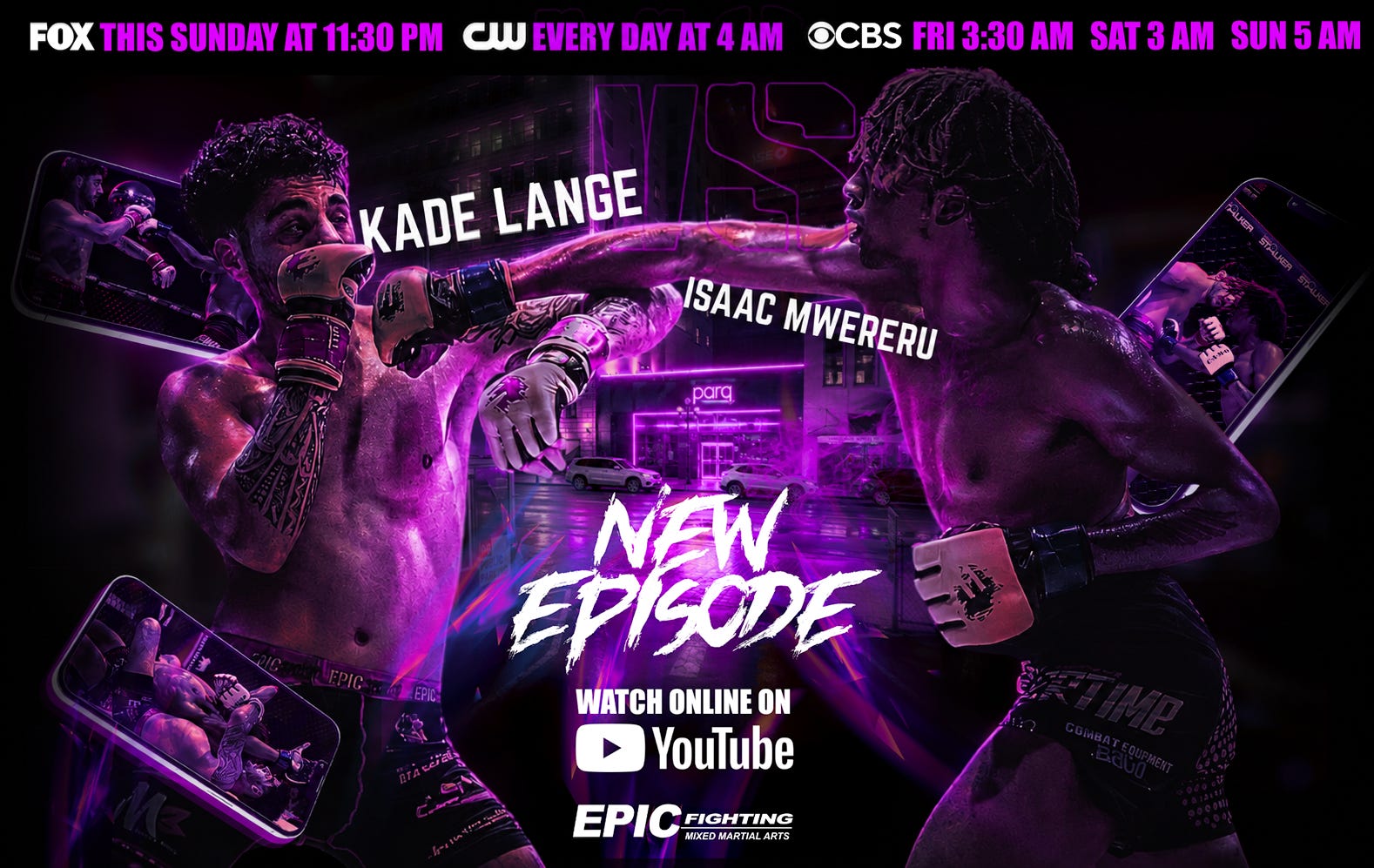
It’s fight day, and the fighter for the main bout has just dropped out of the card. Everyone is scrambling. The card must go on. The matchmaker, William ‘Chorizo,’ is calling his backups to see who can fight, and the CEO of EPIC Fighting, Jason Stewart, is calling his guy: Pedro Batista Silva Neto.
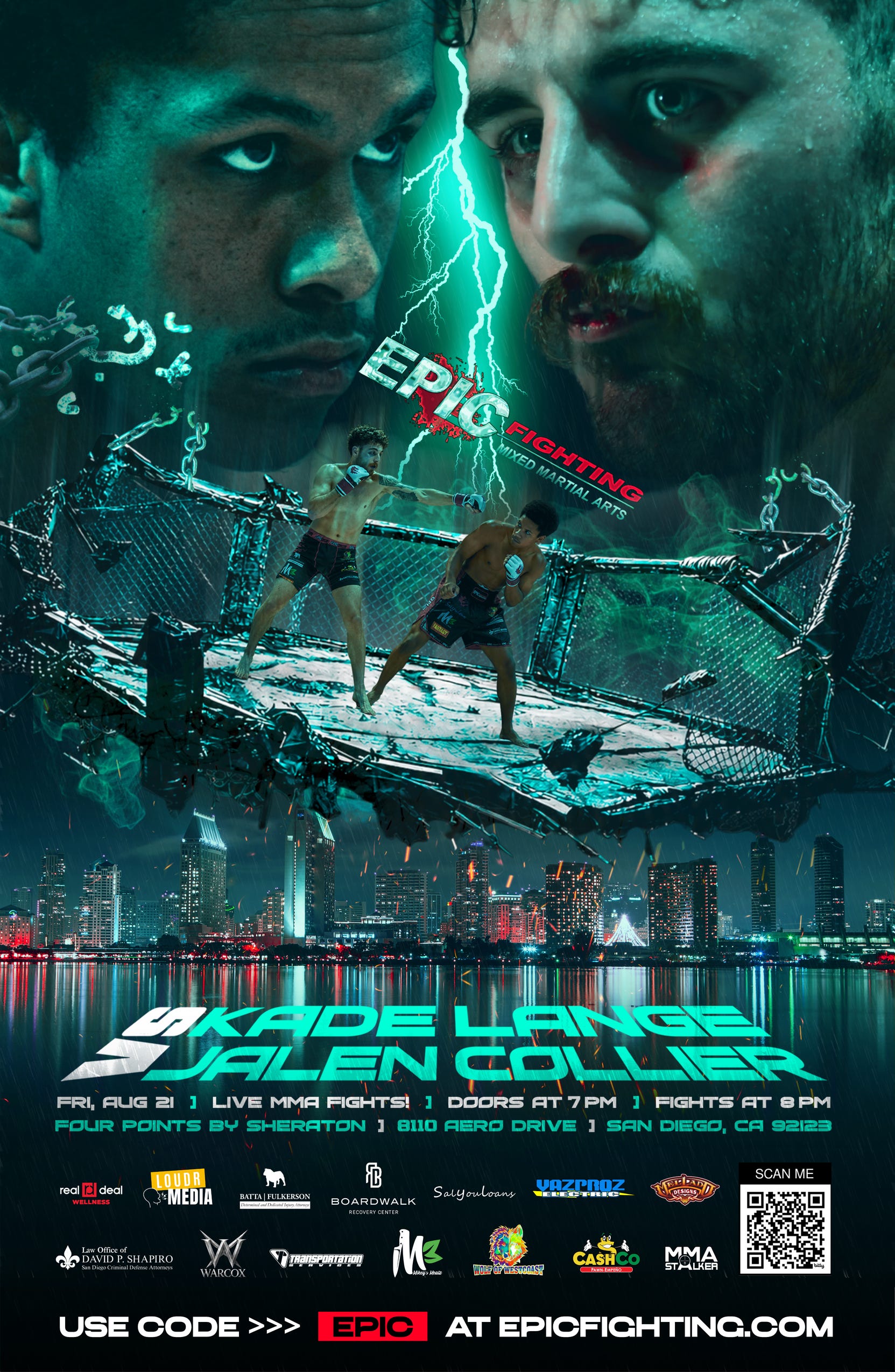
Pedro’s already put untold hours into making EPIC look epic—each fight card promo image takes four to ten hours to create from scratch—and this is just another part of his job. Last-minute dropouts come with the territory, and Pedro’s got a game plan for it: work overtime. It doesn’t matter what time it is at home compared to local San Diego time. He’s the guy Jason can rely on, and the guy fans and fighters can rely on for the most up-to-date, professional look for the promotion.
Pedro gets to work, and soon there’s a new fight poster featuring the replacement fighter’s image, with the matchup cards updated to reflect all the new information. He sends them to the print shop EPIC works with, which can churn out promo material with as little as two hours’ notice—just in time for fight night. Then he opens the code editor for EPIC’s website, updates the matches, and edits promotional fight video, if time allows.
Doors open at seven, and fans start arriving. The new fight posters are already front and center, and attendees grab a fight postcard featuring all the updated bouts on their way into the venue. Someone pulls up the EPIC Fighting website on their phone to see which matches are scheduled for the evening, and the replacement fighter is already listed. No one sees the work that goes into making it all come together—for them, it’s just a seamless experience. That’s thanks to Pedro and the rest of the crew at EPIC Fighting.
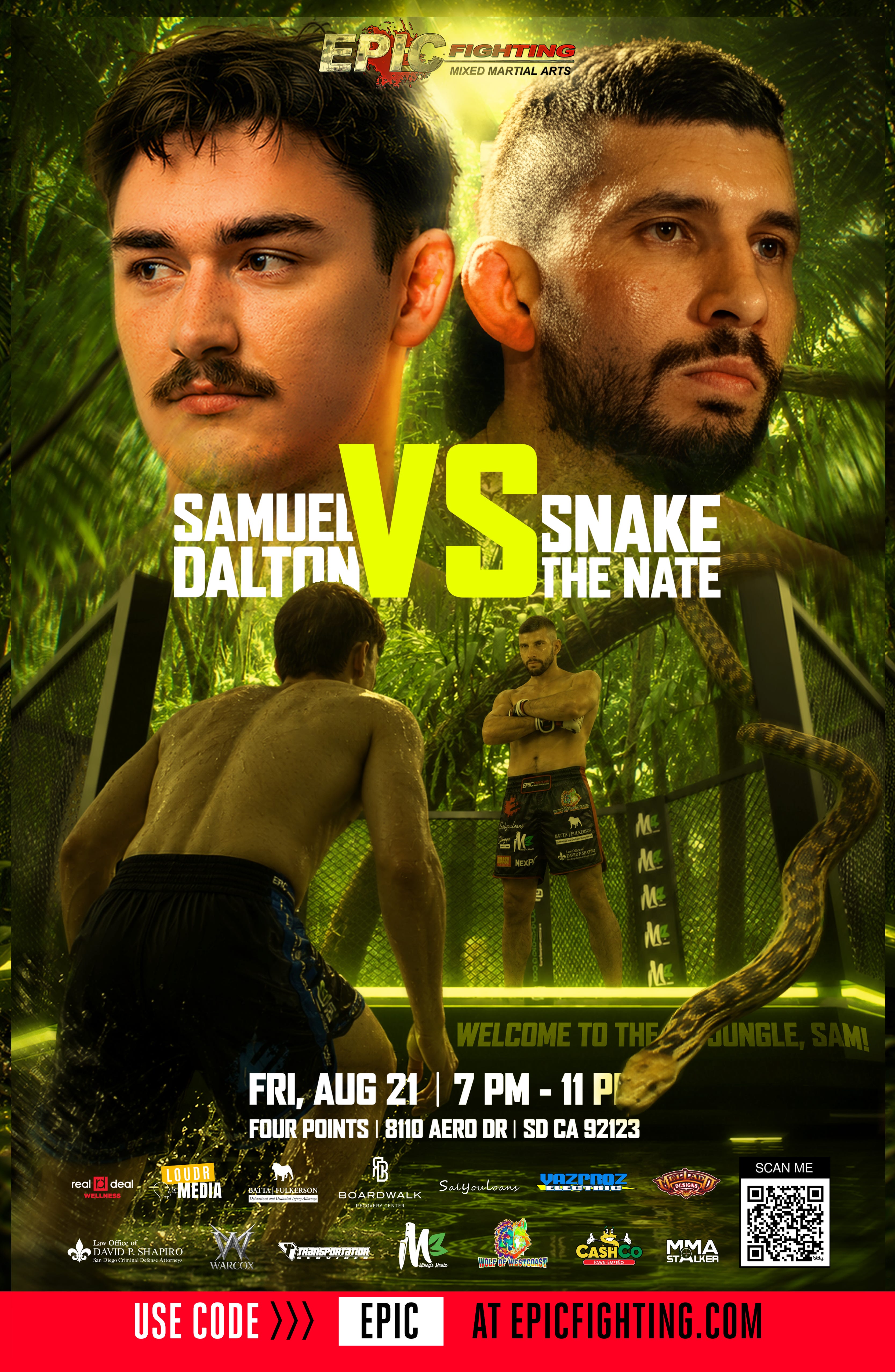
Twenty-four-year-old Pedro does a little bit of everything: graphic design, web coding, 3D modeling, video editing, and music composition. Anything that has to do with design or creative work for EPIC Fighting, he does it. His role has spanned almost a year, covering EPIC 64 through 66.
But Pedro didn’t get his start in MMA-related creative design. He used to work in sales for an interior design company in Miami before he had to drop that job. Determined to break into screen printing design instead, he spent nine months cold-calling shops everywhere, not just San Diego, but all fifty states and over a hundred cities. What kept him going during that stretch was freelance work he picked up from print shops in Arizona, Nevada, Florida, and Georgia. One of those calls was to Mulado Designs, and though the job wasn't there, it was how he ended up on the radar of Joselin Fuller, a manager at EPIC Fighting, who called him back about a design position.
“‘We’re looking for a designer; could you give us a minute and let’s talk about it?’ I said, ‘Okay, sure, 100%.’ That’s how I first got into it.”
What he didn’t know at the time was that he was the only candidate willing to download a 30-gigabyte file—the archive of work from EPIC’s previous designer—something the other designers in contention for the spot wouldn’t or couldn’t do. Pedro made a few posters, Jason loved them, and Pedro soon became the go-to guy for EPIC’s graphic design.
EPIC’s hexagonal cage presented Pedro with an early challenge: no 3D model of it existed anywhere online, so he built his own, to the cage’s exact real-world dimensions. That model mattered practically, too: Pedro is the one who places sponsors on the cage pads and canvas, a 20-by-18-foot area, before it’s sent out for printing. The same model lets him set keyframes and export video for the broadcasts that air on local San Diego TV, online, and during the livestream. He’s especially proud of a drone shot he produced for the website, showing the branded cage in full 3D.
Pedro brought real print-shop knowledge to the role—print margins, safe areas where no design can go, the four-inch overhang margin the canvas requires. He works across Adobe’s suite (Illustrator, Photoshop, CorelDRAW) as well as Canva and CapCut. He’ll use AI for small elements he integrates into a larger design, but no further—AI isn’t near the quality level he demands. Besides, he loves the work, so why would he outsource it to something that produces an inferior product?
Pedro is from Brazil, the home of modern MMA, so one might assume he’s always been a fan. Not so.
“It’s funny,” he says. “I wasn’t a fan of MMA before. It was coincidental. I didn’t watch MMA; I was more into the NFL and baseball. When this opportunity came up, I suddenly became a fan.”
Now he can’t get enough of it—UFC, PFL, SoCal-based MMA, even BRAVE Combat Federation. He watches all of it, because watching is part of the job.
“What is the UFC doing? What is PFL doing? What are the top promotions doing? I stay tuned to that, especially the visuals, because I want to do better than them. They’re huge; they already have a name, so it’s easier for them to put out a fighter or a hot poster and promote the fight. But we want to create something bigger every year, so I stay tuned to where I can improve, what I can do better than UFC, and what options I have to improve the company.”
When Pedro first started, he didn't know nearly as many of the tricks he'd picked up since. His first task was a poster for EPIC 64. The brief: “Hey, throw these fighters here and there, just do it and make it look nice.” That first poster took sixteen iterations before he was satisfied—and he'll admit it doesn't hold up to what he makes today. He learned on the job, and every last-minute dropout or new arrival became an excuse to hone his craft, all in service of the goal that still drives him: outdoing the top dog. He wants someone to look at a poster and say, “This looks better than the UFC and way cooler.”
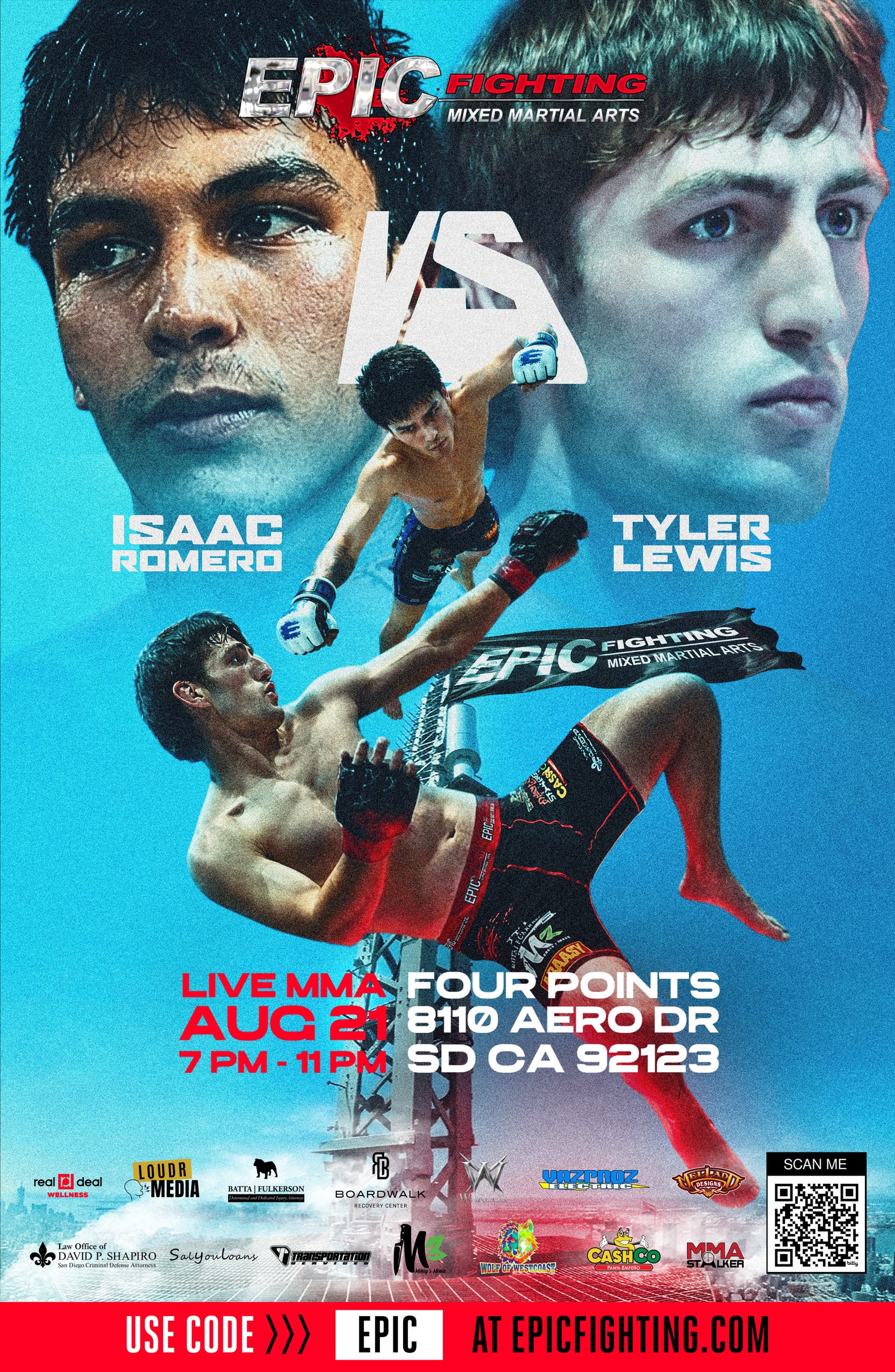
Event week is by far Pedro’s busiest. Between last-minute changes and prepping for the next event before the current one has even wrapped—updating the website, prepping promotional materials and the livestream, promoting the pay-per-view—he’s online basically all week, some days running twelve hours. While the event is underway, Pedro monitors the livestream to ensure everything runs smoothly, which he counts as one of the real perks of the job.
Pedro didn’t attend university for any of this—he’s entirely self-taught. But no one looking at the finished product would know it, and that’s exactly how he likes it.
He can’t just sit behind a computer and code, either. Jason relies on him heavily, but Pedro stays in close contact with the rest of the operation too—EPIC’s ads manager, the matchmaker, the venue, and the team running the livestream—since his job depends on knowing what everyone else is doing.
That people-skills side of the job extends to merchandise, too—Pedro handles the calls to produce stickers, signs, and whatever else EPIC needs, often on tight turnarounds.
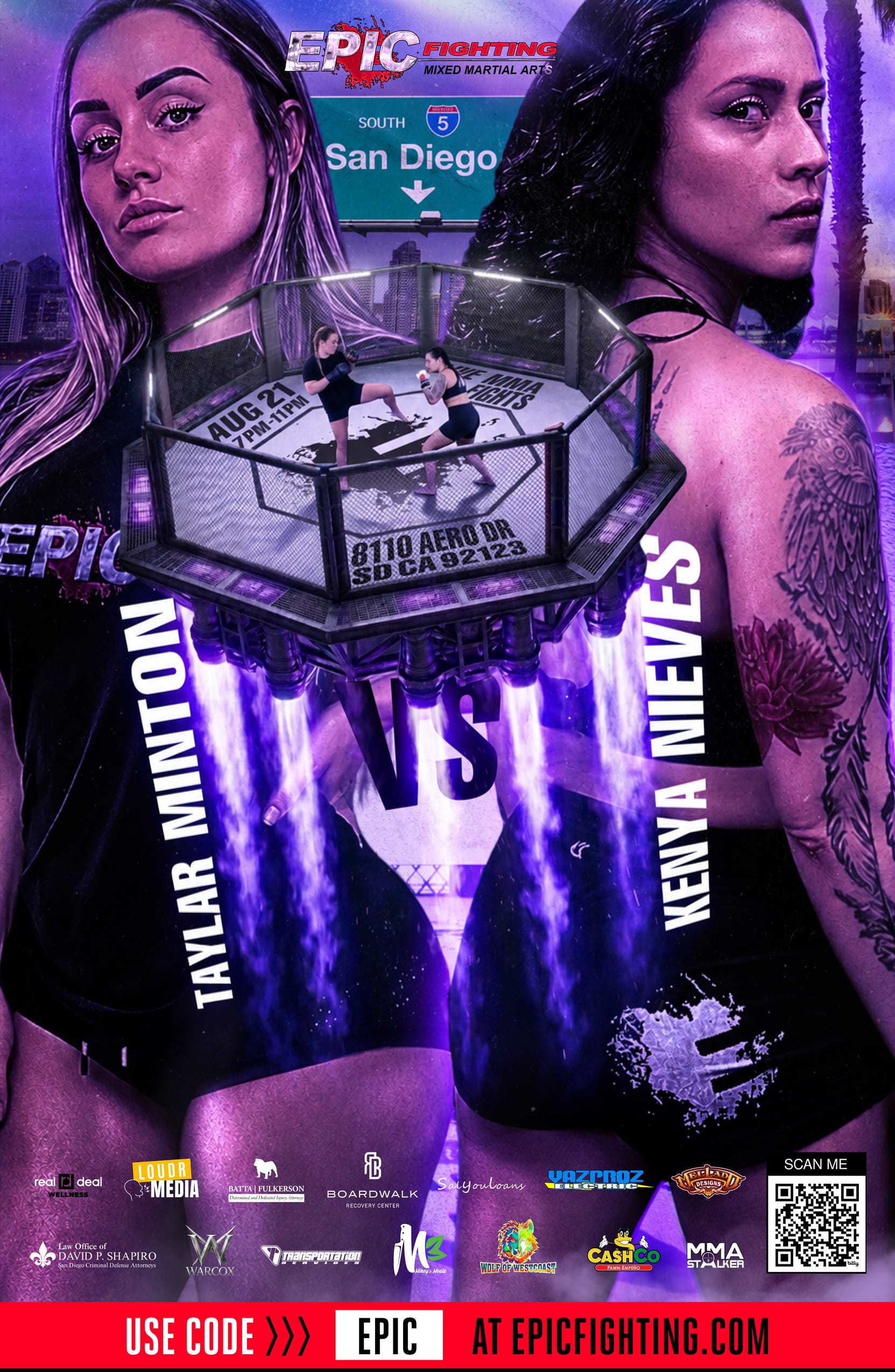
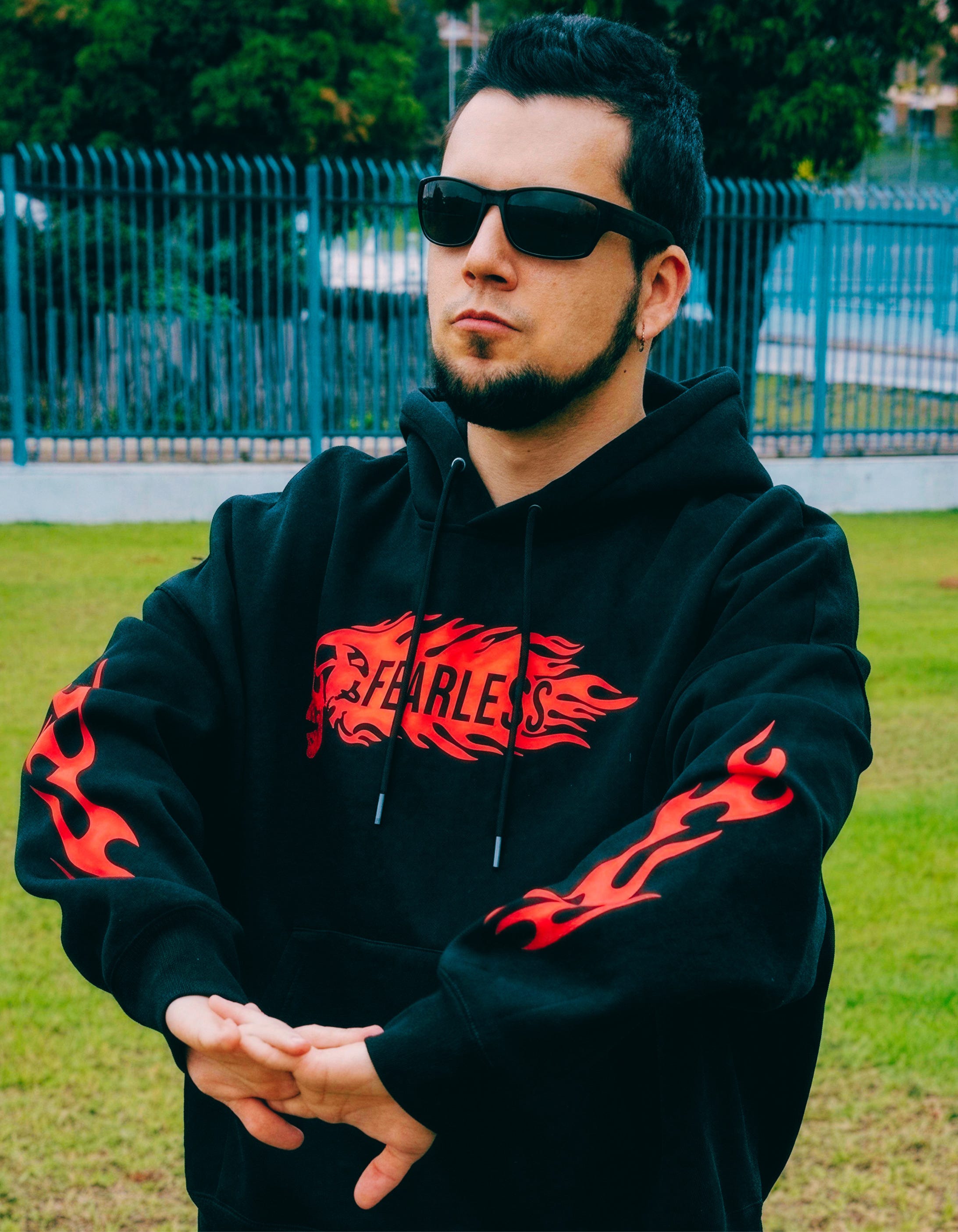
His creativity has been making a splash. His poster for the fight with Snake The Nate got a huge buzz from the Comic-Con crowd—a jungle theme he says was inspired by Alex “Poatan” Pereira. EPIC’s street team knew exactly where to place the posters, and their movie-studio polish caught the eye of a crowd already primed to respond to something flashy. He’s now designing merch for EPIC too, including an upcoming Jiu-Jitsu line.
That love for the sport has only grown since he took the job, and he goes on deep dives into it—fight breakdowns, fighters, the moves they use. As a Brazilian, his favorite fighter is a Brazilian one: Diego Lopes. He wishes he could get out to see a fight in person, but he lives in rural Brazil, between Rio and São Paulo—a four-hour drive to the nearest big city, and eight hours to Belo Horizonte, where BRAVE MMA is held. Without his laptop, he can’t just pick up and go; setting aside the risks of the trip itself, everything he needs is on his desktop, and he could be needed at a moment’s notice.
“If I don’t love what I’m doing, I’m not going to do it well,” he says.
Still, Pedro dreams of traveling one day. Vegas is on the bucket list—he was struck by UFC Noche at the Sphere. But more than anywhere he wants to go, he wants people to know how hard he works, and that he can build something huge. He wants to be known not just for the work itself, but for trying his best at everything. Above all, he dedicates his life and work to his faith and hopes that, through it, he can be a blessing. He knows not everyone has what it takes, so he tries to carry himself as someone nice and professional. When he pictures people driving out to San Diego for EPIC Fighting, he wants them to come because it’s something unique—and he hopes the promotion grows huge, not just in the US, but around the world. He wants to be part of something like that. He wants the Lord to make it happen, and to be part of something truly epic.
Thank you to Pedro Neto and EPIC Fighting for agreeing to the interview. My next article will focus on my experiences at the newly remodeled UFC Meta Apex in Las Vegas. Until next time.
Correction (Aug 25, 2026): This article originally misspelled Mulado Designs. It has been corrected.