


Have you ever had a favorite band you used to see at small venues? It felt intimate, personal, tailored just for you. You’d chat with fellow fans about how great it was to be in on something, and eventually the band started recognizing you back — never quite friends, but casually known. You’d talk to them and the roadies outside during smoke breaks, beer in hand. It felt like insider access, and it felt like something you’d never want to give up.
Then the band “sells out.” Suddenly they’re playing arenas. The casual access disappears. You’re genuinely happy for them — everyone deserves to experience a band you love — but there’s a quiet sense of betrayal underneath the happiness, one you know you’re not really entitled to feel. That’s gatekeeping, and you know it.
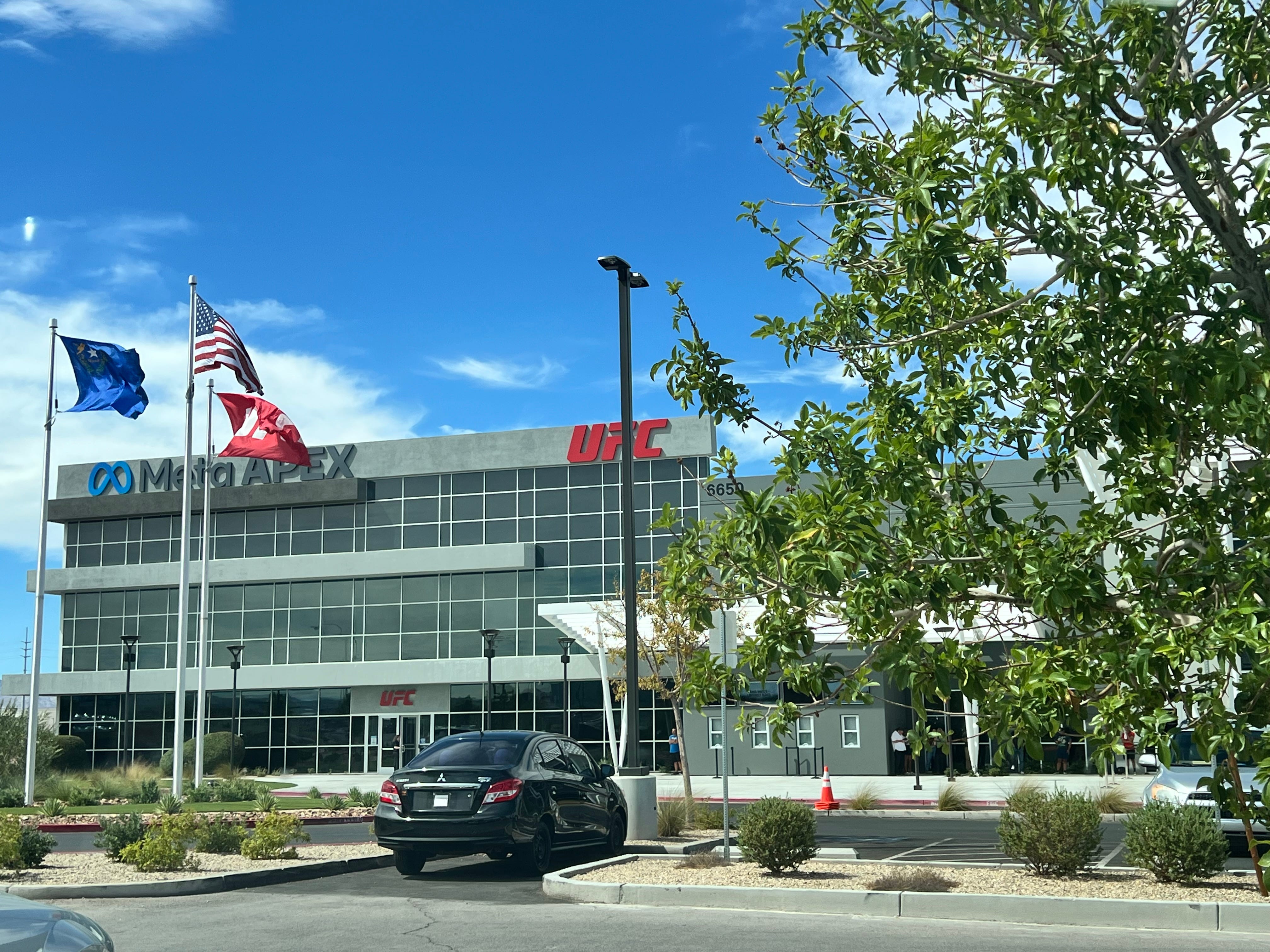
That’s exactly what happened with the UFC Apex. Bigger. More corporate — rebranded with Meta’s name on the building. More accessible to fans who never had a shot at it before. And I’m the guy who has to admit he misses when it wasn’t.
What Changed
Walk through the doors now, and the differences start small. A giant, light-up blue Meta logo competes for space with the red UFC one outside. Inside, a new interactive exhibit lets you scan yourself into an AI-generated fight poster with your favorite fighter, in the spot where a real fight night poster used to hang. The UFC store, once occupying the whole end of the lobby, has been squeezed into a smaller alcove. The other photo-op poster, the one with fighter mannequins, is gone too. The one constant: the large wall-sized poster near the bathrooms and concessions.
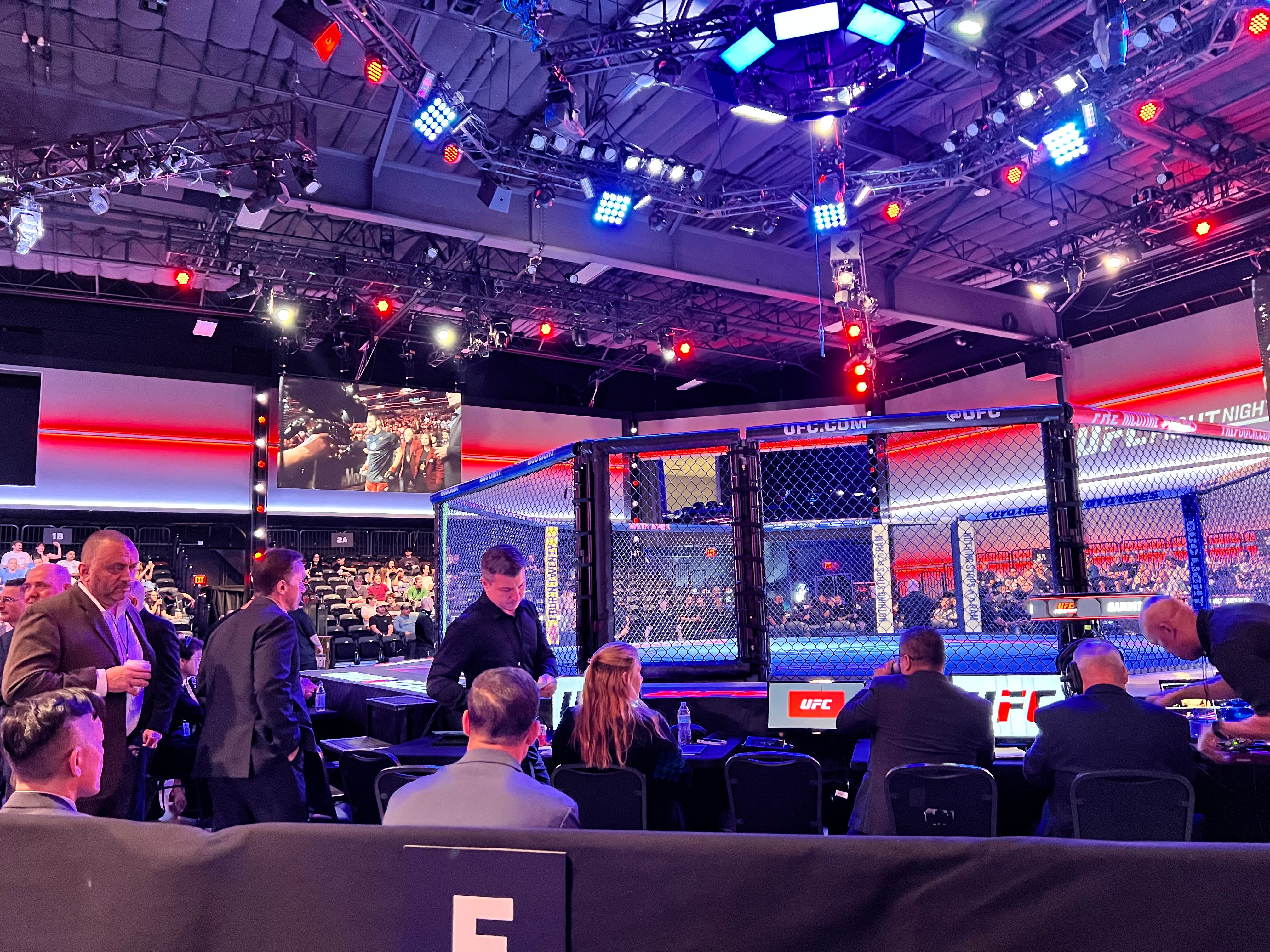
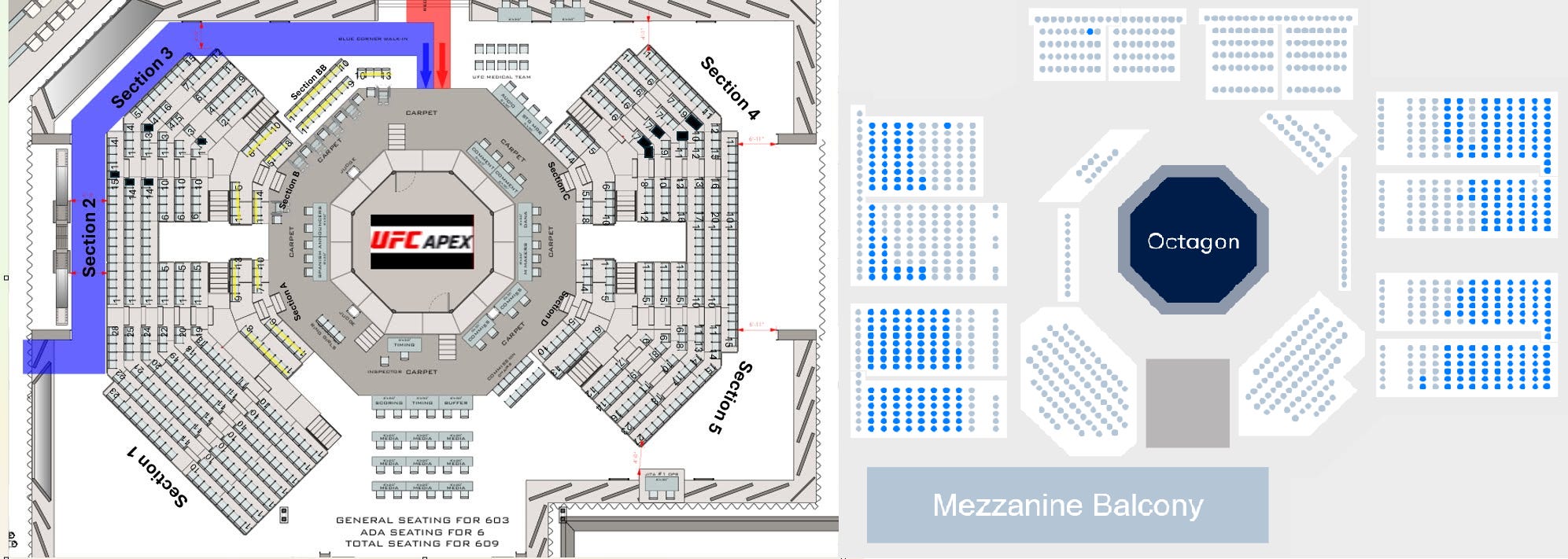
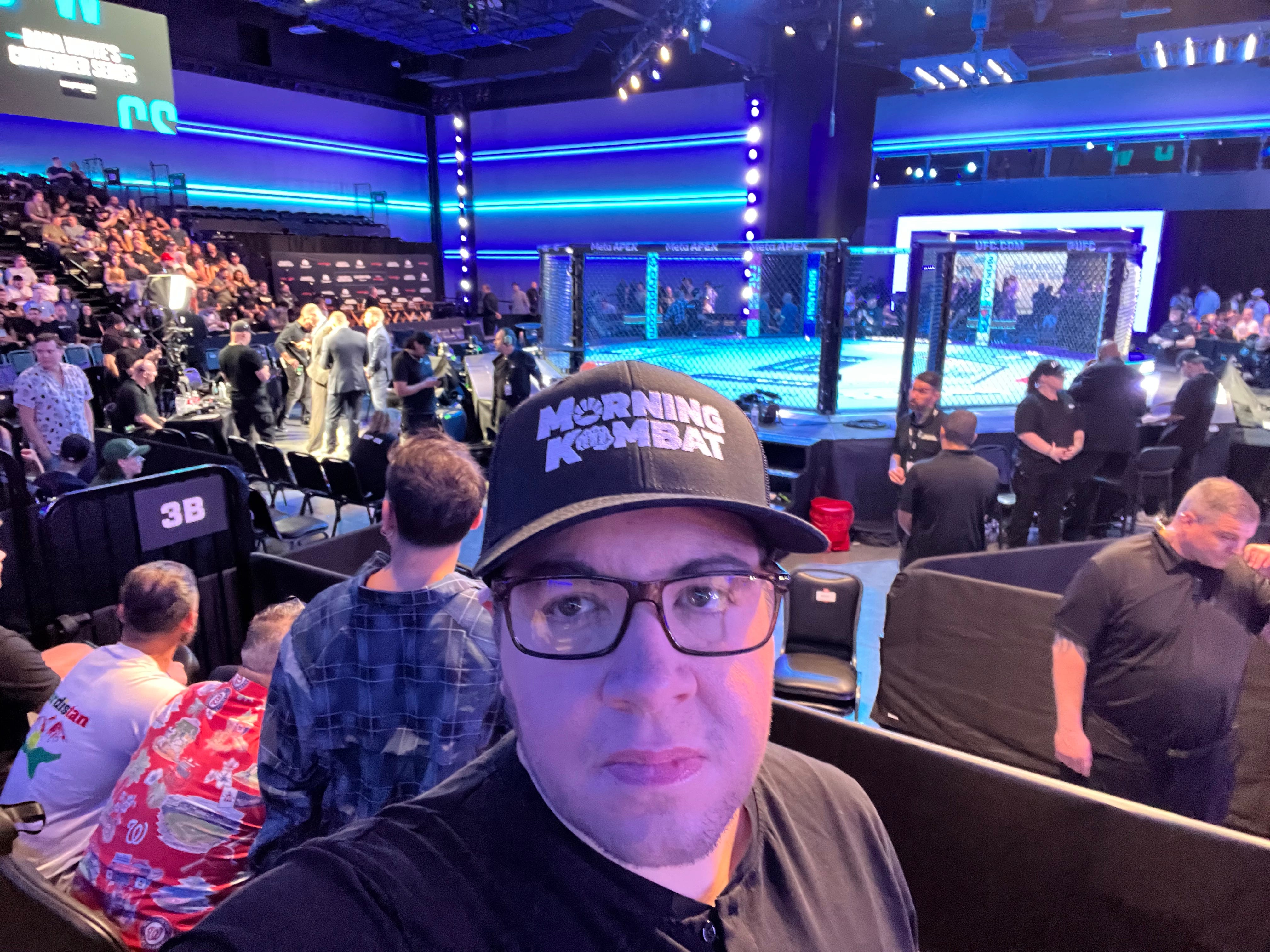
The real transformation is in the room that holds the cage. The red and blue crossbeams that used to hug the walls are gone, and the space has been pushed out and upward. Black fabric walls have been replaced with cream-colored surfaces and vertical strobing lights in red and blue. The press area, once open, is now fenced off and under security control. A new mezzanine, reserved for VIP guests, sits above the entrance side (I watched announcers use it for interviews during UFC BJJ 10). The octagon still sits dead center, exactly where it’s always been.
And the seats. Where the Apex once held 609, it now holds 1,113. Nearly double.
Access and Cost
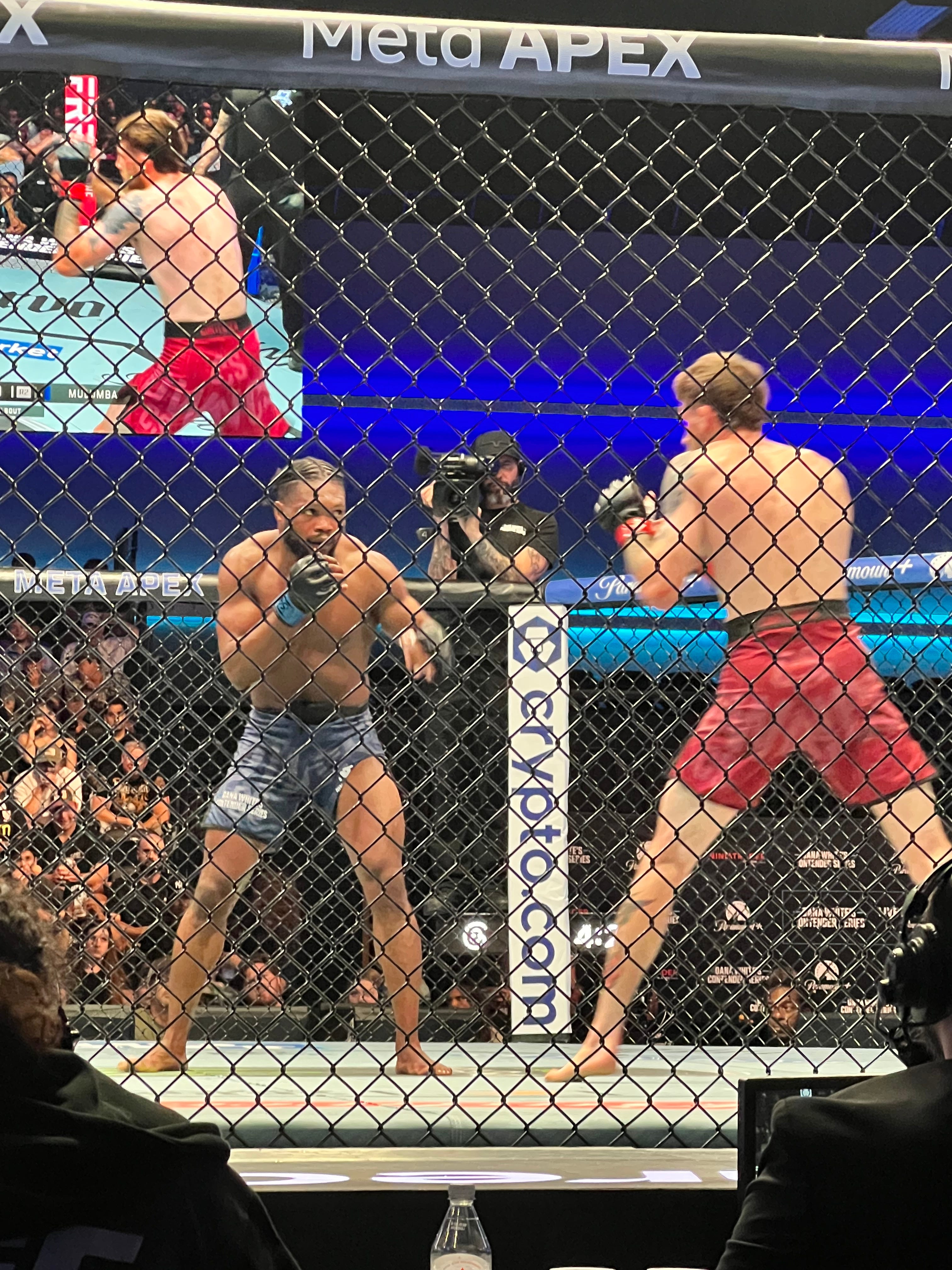
The math on tickets tells its own story. I paid roughly $350 for a row-three seat at UFC Vegas 120. For Dana White’s Contender Series, I paid $25 for front row (about $42 after fees). Compare that to the old Apex, where the cheapest seats ran $350, and getting in at all meant having UFC Fight Club presale access or gambling on resale. More seats means a lower price floor, and a lower price floor means more people get to walk through those doors at all.
What hasn’t changed is how close you can still get to the people who matter. During the Contender Series, I watched a man sitting next to me get a replica UFC Freedom 250 belt signed by Dana White, no hassle at all. He got a trading card signed by Diego Lopes the same night. In my experience, fighters at the Apex are still generous with their time, happy to stop for a photo or an autograph before moving on. That part of the old Apex, the part that made it feel like you were somewhere real, hasn’t disappeared. It’s just competing with a lot more people for the same handful of moments.

What’s Lost
I already told you I’m the fan who has to admit he misses the small room. What I haven’t fully said is what that costs me, specifically.
The bathroom lines are longer now. So are the concession lines. Those are minor. What’s harder to name is the shift in the room itself, the loss of a certain familiarity that used to come standard with a smaller crowd and a smaller space. The old Apex felt like watching regional MMA with UFC-level talent, if regional MMA also had incredible sightlines. It made it easy to actually get to know staff and fighters, which matters more to how I report on this sport than almost anything else.
There’s also a cost I don’t think most fans clock, because it’s mine specifically. I deal with sensory issues, including sensory overload, and the new Apex is louder and more charged than the old one in a way I feel physically.
What Stayed the Same
Not everything changed. Parking is exactly as easy (or as beside the point) as it always was, since most people still show up by rideshare. And the air conditioning, crucial for a Vegas summer that regularly hits 111 degrees, still holds up. Some things about the Apex, thankfully, didn’t get the memo about growing up.
What’s Next
With more events landing at the Apex, from UFC BJJ to Adin Ross’s Brand Risk Promotions, the expansion tracks with a building that outgrew its COVID-era footprint. The open question is what the UFC does with that extra room: keep leasing it out to more third parties, or use it to host more of its own events (Zuffa Boxing, anyone?). Either answer probably means more growth, which probably means less of what made the old Apex the old Apex.
I’m not going to pretend the improvements aren’t good for fans as a whole. They are. Die-hards like me, the ones who show up to every Apex event we can get into, are allowed to grumble about the place “selling out.” But grumbling is where it stops. I don’t get to gatekeep a room that was never mine to gatekeep in the first place.
Look for me in the crowd at Week Three of Dana White’s Contender Series. I’ll be the one in a ballcap that says “SD,” or “Sharks,” or some other weird shit. And who knows. Maybe one day I’ll finally apply for press access and get approved.
Stick around for my next post, which will cover my experience of attending Tuff-N-Uff 156.